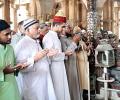
The Uttar Pradesh government has given the allotment letter to the Sunni Waqf board for the land in Dhannipur village in Sohawal tehsil in Ayodhya on the Lucknow highway, about 18 km from the district headquarters, state government spokesperson Shrikant Sharma told reporters on Wednesday.

Criticising the high court verdict on partition of disputed land at Ayodhya and terming it 'strange', the apex court said that the partition of disputed land had "opened a litany of litigation.".
The Sunni Central Waqf Board is expected to file a Special Leave Petition in the Supreme Court on Tuesday, challenging the Allahabad high court verdict in the Ram Janmabhoomi-Babri Masjid title suits.
Prime Minister Dr Manmohan Singh issued this statement on Thursday evening following the Lucknow bench of the Allahabad high court's verdict on the Ayodhya title suit case:
The Supreme Court on Friday dismissed the plea of a non-governmental organisation to intervene in the Ram Janmabhoomi-Babri Masjid title suit.
The Hindu Mahasabha, one of the parties in the Ayodhya title suits, has filed an objection relating to the judgement of the Allahabad high court on the Ram Janmabhoomi-Babri Masjid dispute.
The decision is based on the recommendations of an expert committee set up by the Centre and Uttar Pradesh government to review security arrangements at Ayodhya and the other three places following the terrorist strike.

Besides, various representatives of the Shri Ram Janmabhoomi Teerth Kshetra, members of the Rashtriya Swayamsevak Sangh, Vishwa Hindu Parishad and their allies are also aiding in hand-delivering the invitations.
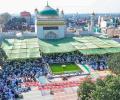
The law prohibits conversion of any place of worship and provides for the maintenance of the religious character of any place of worship as it existed on August 15, 1947.
Embarrassed at the failure to realise their aim of building a bhavya (grand) temple for 'Ram Lalla' at the place called Ram Janmabhoomi despite six years of BJP rule at the Centre, the sants of the Ram Janmabhoomi Nyas have found new issues to occupy them.
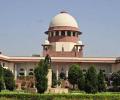
"It can stay awake till midnight to hear the Yakub Memon case and it can extend the hearing of the Ram Janmabhoomi title case for three months, while crores of Indians wait for it."
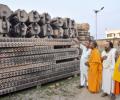
The carving work by artisans had been carried out uninterrupted since 1990 when Mulayam Singh Yadav of the Samajwadi Party was Uttar Pradesh chief minister.

The Supreme Court on Tuesday granted time till October 31 to the Centre to file its response to a batch of pleas challenging certain provisions of a 1991 law that prohibits filing of a lawsuit to reclaim a place of worship or seek a change in its character from what prevailed on August 15, 1947.

'During the Congress rule, the solicitor general had submitted an affidavit in the Supreme Court, stating that the government would side with the sentiments of the Hindu community if an evidence was found of a razed temple, where the mosque was built'

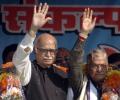
Veteran Bharatiya Janata Party leaders L K Advani and Murli Manohar Joshi reacted to the court acquitting them in the Babri Masjid demolition case.
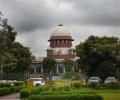
Commencing hearing on pleas challenging the constitutionality of the Places of Worship Act, 1991, the Supreme Court asked the Centre to reply to cross-pleas against or seeking implementation of statute.

The Shankaracharya said the sadhus will begin their march to Ayodhya from Allahabad after Basant Panchami, which falls on February 10.
The Mathura Shahi Masjid Eidgah Committee has approached the Supreme Court, requesting the court to prevent the central government from filing a response to a petition challenging the Places of Worship Act's constitutional validity. The committee accuses the BJP-led government of intentionally delaying its response. The court had previously issued a notice to the government in March 2021, but the government has yet to submit its reply despite numerous opportunities. The committee argues that the government's delay is intended to obstruct those opposing the challenge to the Places of Worship Act from filing their own responses. The petition also states that the pleas challenging the law's validity are scheduled for hearing on February 17, and closing the government's right to respond would serve justice. The Supreme Court previously issued a ruling in December 2022 that stopped courts from entertaining new lawsuits or issuing interim or final orders regarding the reclaiming of religious places, particularly mosques and dargahs. The ruling halted proceedings in 18 lawsuits filed by Hindu groups seeking surveys to confirm the original religious character of 10 mosques, including the Gyanvapi Masjid in Varanasi, the Shahi Idgah Masjid in Mathura, and the Shahi Jama Masjid in Sambhal. This decision was made in response to six petitions, including one filed by lawyer Ashwini Upadhyay, challenging various provisions of the Places of Worship Act. The 1991 law prohibits the conversion of places of worship and guarantees the preservation of their existing religious character as it stood on August 15, 1947. Notably, the dispute regarding the Ram Janmabhoomi-Babri Masjid in Ayodhya was excluded from this law. There are also several cross-petitions advocating for a strict enforcement of the 1991 law to uphold communal harmony and maintain the current status of mosques that Hindu groups seek to reclaim, claiming they were temples before being destroyed by invaders.

The apex court has set October 18 as deadline for completion of all arguments in the protracted land title dispute, a move that has raised the possibility of a verdict in the politically sensitive case in the middle of November.
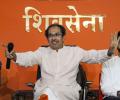
We had requested the government to make a law on construction of Ram Temple but the government did not do that, Thackeray said.
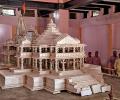
Shamshad said according to Muslims, there is a graveyard known as 'Ganj Shahidan' around the demolished Babri Masjid where 75 Muslims who lost their lives in the 1885 riots in Ayodhya were buried.
The Act prohibits conversion of any place of worship and provides for the maintenance of the religious character of any place of worship as it existed on August 15, 1947.
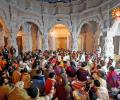
The new idol of Lord Ram was placed Thursday afternoon in the sanctum sanctorum of Ayodhya's Ram Janmabhoomi temple, ahead of the consecration ceremony set to take place on January 22.
The bench then said that it was not going to fast track the matter.

The Opposition's stand on the Ayodhya consecration is puzzling. Their only objection seems to be that the BJP has hijacked a religious event for political benefit. In saying this, the Opposition is either being naive or hypocritical, argues Jyoti Punwani.

"This has to be deprecated. This is something which should not be happening," a five-judge Constitution bench headed by Chief Justice Ranjan Gogoi said.
According to trust sources, Union Home Minister Amit Shah, Defence Minister Rajnath Singh, Rashtriya Swayamsevak Sangh chief Mohan Bhagwat , Maharashtra Chief Minister Udhav Thackeray and Bihar CM Nitish Kumar are also on the list of invitees.

Can ordinary citizens counter this backward march? Can peace activists ensure that the two communities retain their bonds? Do they have a choice, asks Jyoti Punwani.
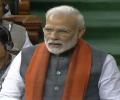
Making a statement in the lower house soon after a meeting of the Union Cabinet, Modi said, "An autonomous trust has been formed, it is called 'Shri Ram Janambhoomi Teertha Kshetra'." The Supreme Court had directed the government to form the trust within three months and the deadline was ending on February 9.
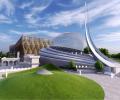
The Allahabad high court on Monday dismissed a petition filed against the allotment of land in Ayodhya's Dhannipur village for the construction of a mosque, following the Supreme Court verdict in the Ram Janmabhoomi-Babri Masjid dispute.

He further said that time has come to discuss the issue of Ram Temple and should try to find a permanent solution.

'Attending roza-iftar with a skull cap is not secularism. People also know that this is drama'

He accused the Congress of putting up obstacles to the temple's construction through 'its lawyers' in the Supreme Court.
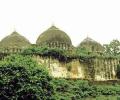
Sources said the parties have sought settlement under the provisions of The Places of Worship Act, 1991 which provides that no dispute with regard to any mosque or other religious places, which have been constructed after demolition of temples and are existing as in 1947, would be raised in a court of law.

Thousands of Shiv Sainiks are expected to accompany Eknath Shinde on his visit to Ayodhya on Sunday, his first such visit after being sworn in as the Chief Minister of Maharashtra in June last year.

A plea claimed that Bhaskar had made "derogatory and scandalous" statements against the courts in the country and mentioned the Ayodhya case judgement.

"Shouldn't they get Indian citizenship? Shouldn't their human rights be protected?" Shah asked the audience which responded with a resounding "yes".
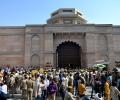
In an unusual coincidence, the two judges of a Supreme Court bench hearing a plea against the survey of the Gyanvapi-Shringar Gauri complex in Varanasi have had an association with a similar kind of dispute relating to the Ram Janmabhoomi-Babri masjid issue as well.
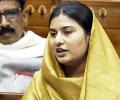
Samajwadi Party leader and Kairana MP Iqra Choudhary has moved the Supreme Court seeking effective implementation of the Places of Worship (Special Provisions) Act, 1991. This move comes amidst several petitions challenging the law's validity, including those filed by the Akhil Bhartiya Sant Samiti and lawyer Ashwini Upadhyay. The Supreme Court, in December 2022, had restrained all courts from examining fresh suits and passing interim orders in pending cases seeking to reclaim religious places. The Act aims to maintain the religious character of places of worship as they existed on August 15, 1947, but the dispute relating to Ram Janmabhoomi-Babri Masjid at Ayodhya was kept out of its purview. The court has listed Choudhary's plea with other pending pleas for February 17.
The Supreme Court will hear on April 5 a batch of PILs challenging the validity of certain provisions of a 1991 law that prohibits filing of a lawsuit to reclaim a place of worship or seek a change in its character from what prevailed on August 15, 1947.
 © 2026 Rediff.com - Advertise with us - Disclaimer - Privacy Policy - Sitemap - Feedback - About us - Terms of use - Grievances